Automotive Automation Solutions
Forged Path Automation delivers robotic automation solutions and precision manufacturing services to critical sectors where gas turbine performance drives operations. Our expertise spans the complete turbine ecosystem from aerospace to power generation.
What Are Automotive Automation Solutions?
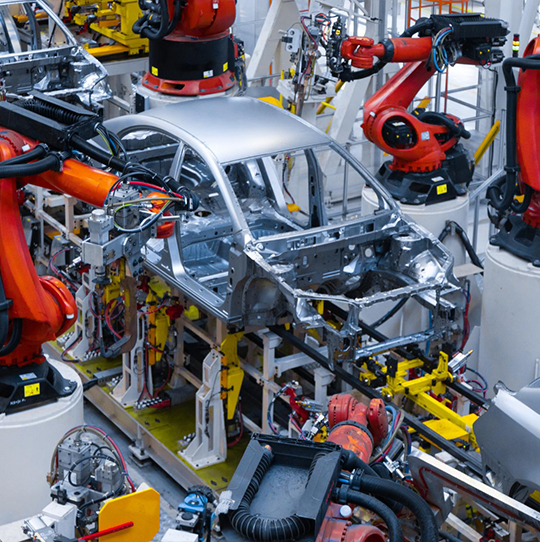
Automotive automation solutions are robotic cells engineered to handle the cycle times, consistency, and volume automotive manufacturing demands. They cover robotic finishing, deburring, cleaning, and custom tooling for castings, housings, chassis components, and sub-assemblies. Automotive manufacturers reduce labor dependency, improve part consistency, and scale output without scaling headcount.
Automotive manufacturing operates on cycle times and quality standards that leave no room for manual variability. Castings, housings, chassis components, and sub-assemblies all need fast, consistent processing at volumes manual teams cannot sustain. Labor costs keep rising while skilled operator availability keeps falling. Forged Path Automation builds robotic cells that hold quality across every cycle, with process engineering done before any equipment enters the conversation. Automotive manufacturers gain repeatable quality, documented throughput, and a support team that stays long after commissioning.
What Every Automotive Automation Solution From FPA Includes
- Process engineering finished before any equipment is specified or quoted
- Robotic finishing and deburring built for castings and structural components
- Robotic cleaning configured for part preparation before downstream processes
- Custom tooling that holds position and consistency across every cycle
- Cycle-time documentation built into the design phase, not estimated later
- Integration with existing automotive lines, conveyors, and inspection systems
- Defined post-commissioning support — not a handoff and a closed door
- Operator training built into the build phase, not bolted on after launch
How Automotive Automation Solutions Work
Most automotive manufacturers have lived through at least one project that missed cycle targets or shipped without documentation. FPA's process runs in five defined steps with clear expectations at every stage.
Step 1 — Process Engineering. First, our team walks your floor, studies the parts and cycle times, and defines the process before any equipment enters the conversation. The system fits your line — not the other way around.
Step 2 — System Design. Next, we specify the robot, end effector, tooling, and integration points needed to hit your line's cycle times and quality standards.
Step 3 — Build and Integration. Then, we build the cell, integrate the custom tooling, and configure every controller and safety circuit. Furthermore, we test against your cycle-time specifications before the system ever ships.
Step 4 — Commissioning. Once installed, our team validates the cell against the documented process on your actual parts and your actual production floor. As a result, the cell hits cycle time on day one — not month three.
Step 5 — Ongoing Support. Finally, FPA stays involved long after commissioning. Spare parts planning, operator support, and process adjustments live inside the relationship — not billed as surprises.
Why Are Automotive Manufacturers Turning to Robotic Automation?
Automotive manufacturers face rising labor costs, shrinking skilled operator pools, and cycle-time pressure manual processes cannot sustain. Automotive automation solutions deliver the consistency castings and structural components demand at production volume. Purpose-built tooling holds position across every cycle — so quality stops depending on which operator clocked in that shift.
Additional Automotive Automation Services From FPA
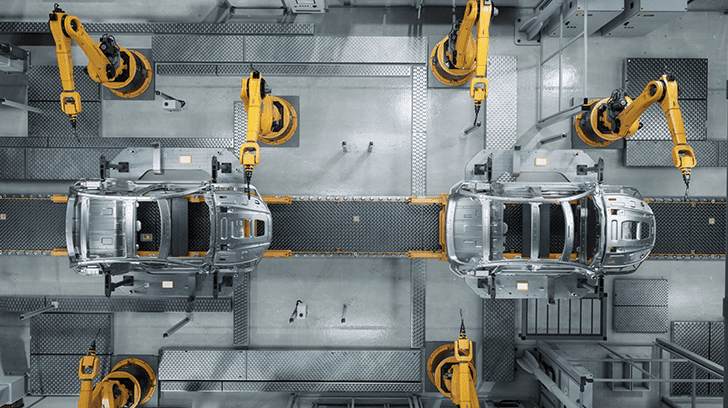
A single robotic cell rarely solves the full automotive manufacturing problem. FPA builds automotive automation solutions around your operation so every service works together from day one.
Robotic Finishing Automation. Our team builds robotic finishing and deburring cells for castings, housings, and structural components. Finish quality holds across every cycle and inspection rejection rates drop.
Robotic Cleaning Automation. Part preparation before downstream processes has to repeat across every part. Therefore, our robotic cleaning cells deliver documented, consistent surface preparation that paint, coating, and assembly lines depend on.
Custom Robotic Tooling and Fixtures. Off-the-shelf tooling rarely holds position across automotive cycle times. We engineer custom tooling that holds your parts the same way on cycle one and cycle one million.
Process Engineering and System Design. Every automotive automation project begins with process engineering. That engineering work defines what the system must do before any equipment is specified
How Fast Can a Robotic Cell Pay for Itself in Automotive?
Most automotive robotic cells return on investment inside 18 to 36 months — sometimes faster on high-volume castings and structural parts. The savings come from reduced labor dependency, lower scrap rates, and consistent cycle times. The ROI math improves once scrap-rate reduction and warranty-claim avoidance are factored into the model.
FPA’s Industrial Automation Solutions
FPA builds and supports the following turnkey robotic automation systems for manufacturers across aerospace, automotive, turbine, MRO, and general industrial sectors.
Robotic Finishing Automation
Programmable robotic cells for polishing, buffing, deburring, and sanding — delivering consistent surface quality across every part, every shift. Learn more about robotic finishing automation.
Robotic Cleaning Automation
Robotic cells for part cleaning, surface preparation, and pre-coating cleaning operations — eliminating the defects that inconsistent manual cleaning creates in downstream processes. Learn more about robotic cleaning automation.
Custom Robotic Tooling and Fixture Design
Purpose-built end-of-arm tooling and fixtures designed for your specific parts, validated in real production conditions, and supported long-term by the same engineers who built them. Learn more about robotic tooling and fixture design.
Process Engineering and System Design
Deep process engineering before any system is specified — feasibility analysis, cycle time optimization, and automation strategy built around your real production requirements from the start. Learn more about process engineering and system design.
Why Forged Path Automation for Automotive Automation
Most industrial automation integrators treat automotive like any other sector. Automotive manufacturers end up with generic cells, off-the-shelf tooling, and an integrator who disappears after commissioning. According to the International Federation of Robotics, the automotive industry remains one of the largest users of industrial robots worldwide — and the gap between a well-built cell and a generic one shows up in cycle time and scrap rates every shift.
FPA works differently. Every automotive automation solutions build begins with process engineering and ends with a defined ongoing support relationship. Our cells fit your parts, your line, and your cycle times — not a template applied to your facility. Automotive manufacturers gain a system designed to perform from day one and a team that stays involved long after launch.
Frequently Asked Questions About Automotive Automation Solutions
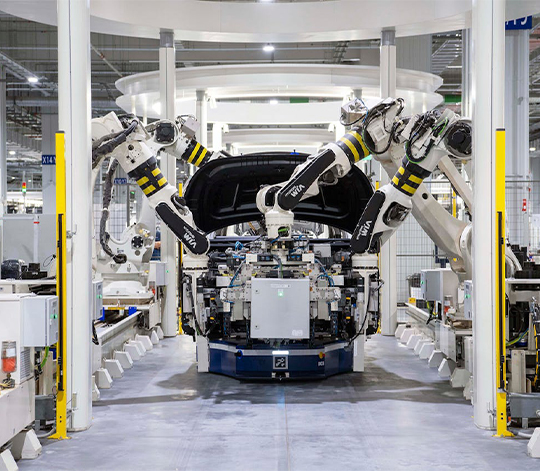
Most automotive automation cells run from process engineering through commissioning in four to nine months, depending on complexity. Process engineering drives the front end while custom tooling design and build account for the middle phase. Because we scope every project on your timeline, the schedule stays clear from day one.
Yes. Our robotic cells feed into the conveyors, inspection systems, and quality documentation already running on your automotive floor. Integration sits inside the system design phase — not added after the cell is commissioned.
Castings, housings, chassis components, sub-assemblies, and high-volume finished parts are all common applications. Custom tooling allows the same robotic cell to handle multiple part families when the process supports it. Finishing, deburring, and cleaning applications cover the majority of automotive use cases.
Our team stays involved. Spare parts planning, operator support, process adjustments, and documentation updates live inside the relationship. Automotive manufacturers gain a long-term partner — not a vendor that disappears after the install.
Ready to Build an Automotive Robotic Cell That Hits Cycle Time?
Automotive automation solutions built correctly turn high-variability manual processes into documented, repeatable production systems. Every automotive manufacturer we work with gains a cell engineered around their parts and cycle times, supported long after commissioning. The right foundation changes everything.